

Jonio González nació en Buenos Aires en 1954 y vive en Barcelona desde 1983. En 1981 fundó, con Javier Cófreces, la revista de poesía La Danza del Ratón.

Es autor, entre otros títulos, de los poemarios El oro de la república (1982); Muro de máscaras (1987); Cecil (1991); Últimos poemas de Eunice Cohen (1999); El puente (2001, 2003); Ganar el desierto (2009); La invención de los venenos (2015), Historia del visitante (2019) y Esbozos y representaciones (2022). Ha sido incluido en diversas antologías, entre ellas Una antología de la poesía argentina (Santiago de Chile, 2008); Doscientos años de poesía argentina (Buenos Aires, 2010); Antología de poesía argentina de hoy (Barcelona, 2010); Poésie récente d’Argentine: une anthologie possible (París, 2013) y La doble sombra: poesía argentina contemporánea (Madrid, 2014). Como traductor de poesía, sus últimas publicaciones incluyen la antología en dos volúmenes Poetas norteamericanos en dos siglos (2020) y Esperando mi vida, de Linda Pastan (conjuntamente con Rosa Lentini, 2021). ha colaborado traduciendo a varios poetas en In nomine Auschwitz.Antología de la poesía del Holocausto , de Carlos Morales del Coso (2022).
Otros artículos de este autor






THOMAS LUX
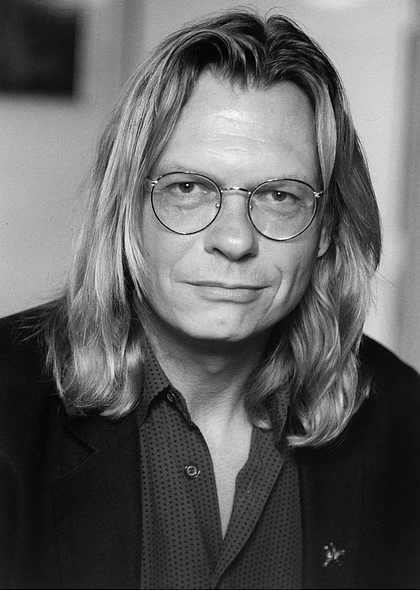
THOMAS LUX nació Northampton, Massachusetts, en 1946, en el seno de una familia de clase trabajadora (vivía en una granja, su padre era lechero). Estudió en el Emerson College, donde fue poeta residente entre 1971 y 1975, y en la Universidad de Iowa. Durante casi treinta años fue profesor de escritura creativa en el Sarah Lawrence College. Publicó catorce libros de poesía, entre ellos Memory’s handgrenade (1972), The Glassblower’s Breath (1976); Sunday (1979); The Drowned River (1990); The Blind Swimmer: Selected Early Poems, 1970–1975 (1996); New and Selected Poems, 1975–1995 (1997); The Street of Clocks (2001); Child Made of Sand (2012) y To the Left of Time (2016). Su poesía, influida al principio por el neosurrealismo de los años setenta en general y James Tate y Bill Knott en particular, evolucionó hacia, en palabras de Richard Damashek, una complejidad que «refleja un mundo tan insano como inhóspito». Lux murió en Atlanta, Georgia, en 2017.
EL LECHERO Y SU HIJO

Durante un año recogió
las botellas de leche, las rajadas,
rotas, o con la etiqueta azul
con el dibujo de una granja
desteñido. En invierno
cargaban las cajas en un trineo
y las arrastraban hasta el basural
que entonces era precioso: una sábana blanca
tendida, como una broma, sobre
la cara de alguien que dormía.
Mientras arrojaban las botellas
el hijo hacía travesuras
y el lechero se las festejaba: lanzaba
una botella a gran altura
y la hacía añicos al vuelo
con otra. Mil asombrados
trozos de vidrio
caían... Otra vez
y otra, y maldito
si ese lechero,
ese alegre lanzador
en el borde del basural (mientras los voladores
desechos salpicaban de nieve
sus sombreros)
THE MILKMAN AND HIS SON

For a year he’d collect
the milk bottles—those cracked,
chipped, or with the label’s blue
scene of a farm
fading. In winter
they’d load the boxes on a sled
and drag them to the dump
which was lovely then: a white sheet
drawn up, like a joke, over
the face of a sleeper.
As they lob the bottles in
the son begs a trick
and the milkman obliges: tossing
one bottle in a high arc
he shatters it in midair
with another. One thousand
astonished splints of glass
falling…Again
and again, and damned
if that milkman,
that easy slinger
on the dump’s edge (as the drifted
junk tips its hats
of snow) damned if he didn’t
hit almost half! Not bad.
Along with gentleness,
and the sane bewilderment
of understanding nothing cruel,
it was a thing he did best.
TARÁNTULAS EN EL SALVAVIDAS

Por algún motivo semitropical
cuando llueve
implacablemente caen
en las piscinas estos por lo demás
brillantes y terroríficos
arácnidos. Pueden nadar
un poco, no por mucho tiempo,
y no pueden subir por la escalera para escapar.
Por lo general se ahogan, pero
si quieres su favor,
si crees que existe la justicia,
una recompensa por no querer
la muerte de desagradables
y aun peligrosas (anguilas, serpientes nariz de cerdo,
ratas) criaturas, si
crees estas cosas, entonces
tendrías que dejar un salvavidas
o dos en tu piscina por la noche.
Y por la mañana
arrastrarías fuera
las acurrucadas, peludas supervivientes
y las acompañarías
de nuevo al matorral y, ¿sabes?,
te asegurarías de que al menos las que se han salvado,
como individuos, no aparecerán
de nuevo un día
en tu sombrero, un cajón
o el enmarañado inframundo
de tus calcetines, y que incluso—
cuando tu confianza en la justicia
se une a tu confianza en los sueños—
pueden comunicar a las otras
mediante un lenguaje de signos
cuatro veces más ingenioso
y complejo que el del hombre
que eres bueno,
que las amas
que las salvarías de nuevo.
TARANTULAS ON THE LIFEBUOY

For some semitropical reason
when the rains fall
relentlessly they fall
into swimming pools, these otherwise
bright and scary
arachnids. They can swim
a little, but not for long
and they can’t climb the ladder out.
They usually drown—but
if you want their favor,
if you believe there is justice,
a reward for not loving
the death of ugly
and even dangerous (the eel, hog snake,
rats) creatures, if
you believe these things, then
you would leave a lifebuoy
or two in your swimming pool at night.
And in the morning
you would haul ashore
the huddled, hairy survivors
and escort them
back to the bush, and know,
be assured that at least these saved,
as individuals, would not turn up
again someday
in your hat, drawer,
or the tangled underworld
of your socks, and that even—
when your belief in justice
merges with your belief in dreams—
they may tell the others
in a sign language
four times as subtle
and complicated as man’s
that you are good,
that you love them,
that you would save them again.
EN EL DORMITORIO DE ENCIMA DE LA SALA DE EMBALSAMAMIENTO

un hombre con camiseta blanca y medias blancas sentado
en el borde de la cama. Es mi vecino,
el de la funeraria del barrio.
Su esposa está acostada a su lado, leyendo un libro,
la sábana le cubre los pechos.
De lo contrario, mirarla sería de mala educación.
O para mirar debería esperar a que se vistiesen.
Desde mi ventana forman una especie de X.
A ella la he visto dar de comer a los pájaros,
pero no mucho para que no se queden
demasiado y dejen sus huellas de cal
en el escritorio y le hagan perder el tiempo
lavándolo.
IN THE BEDROOM ABOVE THE EMBALMING ROOM

a man sits on the bed’s edge in a white T-shirt,
white socks. He is my neighbour,
the local undertaker.
His wife lies behind him, reading a book,
the sheet drawn up above her breasts.
Otherwise, it would be impolite to look.
Or to look I’d wait until they dressed.
From my window they make a kind of X.
I’ve seen her feed the birds,
but not so much they stay
too long and leave their lime
to stain her deck and waste her time
in washing it away.
LADRILLOS QUE SE HUNDEN EN AGUAS PROFUNDAS

¿A qué profundidad desaparece su opaco color anaranjado?
Remé hasta donde sé que el agua es profunda,
y en mi bote: un cargamento
de ladrillos, cincuenta apilados
en la popa, así de simple.
En el fondo de este embalse
había un pueblo. Dos pueblos, en realidad.
A su gente se le pagó una suma justa
para que se fuera, pero sin hacer preguntas: tenían que trasladarse.
Echo el ancla cuarenta pies por encima
de lo que una vez fue un prado.
Primero agarro un ladrillo de babor
y lo sujeto por la esquina superior derecha
y meto su esquina inferior izquierda en el agua
antes de dejar que resbale entre mis dedos.
El siguiente lo agarro de estribor,
pero ha caído de babor, y así sucesivamente.
La mano izquierda es la que hace el trabajo.
Es visto y no visto. Se hunden hasta detenerse
en lo que ahora es una tierra anegada y sin hierba.
¿Por qué quiero dejar unas cuantas
piedras trangulares artificiales
en el fondo de este cuerpo de agua sin huesos?
(el cementerio fue trasladado).
¿Quién no ha amado, en la oscuridad,
el borroso, fuerte, anaranjado resplandor
de los ladrillos?
BRICKS SINKING IN DEEP WATER

At what depth does their dull orange disappear?
I rowed out to where I know the water’s deep,
and in my rowboat: a cargo
of bricks, fifty balanced
across the stern, just so.
At the bottom of this reservoir
was a town. Two towns, in truth.
Its people were paid an honest price
to leave, but no question: they had to move.
I anchor my boat forty feet above
what was once a pasture.
I take a brick from port first
and hold it by its upper right corner
and dip its lower left corner into the water
before I let it slip my fingers.
The next one I take from starboard,
but drop from port, and so forth and on.
It’s the sinestra hand that does the work.
I never counted two seconds before one was gone
from touch, and sound, and sight. They sink until they stop
on now drowned and grassless land.
Why do I want to leave a small scattering
of man-made triangular stones
at the bottom of this no-bones
(the cemetery relocated)
body of water?  In darkness, who does not love
the faint, hard, orange glow
of building bricks?
VÍCTIMAS DE LA PLAGA ARROJADAS POR ENCIMA DE LOS MUROS DE LA CIUDAD SITIADA


Primera guerra
biológica.
La muerte
así lanzada semeja ruedas
en el cielo.
Mira: ahí va
Larry el Zapatero, descalzo, por encima de la pared,
y Mary la Salchichera, mira cómo vuela,
y los mellizos Sombrereros, los dos a la vez, sobrevolando
el parapeto, el codo del pequeño Tommy doblado
como si saludara,
y su hermana, Mathilda, detrás de él,
con los brazos extendidos, en el aire,
igual que hizo
en la tierra.
PLAGUE VICTIMS CATAPULTED OVER WALLS INTO BESIEGED CITY

Early germ
warfare.
 The dead
hurled this way look like wheels
in the sky.
 Look: there goes
Larry the Shoemaker, barefoot, over the wall,
and Mary Sausage Stuffer, see how she flies,
and the Hatter twins, both at once, soar
over the parapet, little Tommy's elbow bent
as if in a salute,
and his sister, Mathilde, she follows him,
arms outstretched, through the air,
just as she did
on earth.
También te puede interesar



La fotografía de portada ha sido extraída de «The Paris Rewiew» de Dan Piepenbring


 La Náusea
Deja un comentario